Light My Cells 2 : Transmitted Light to Fluorescence Challenge
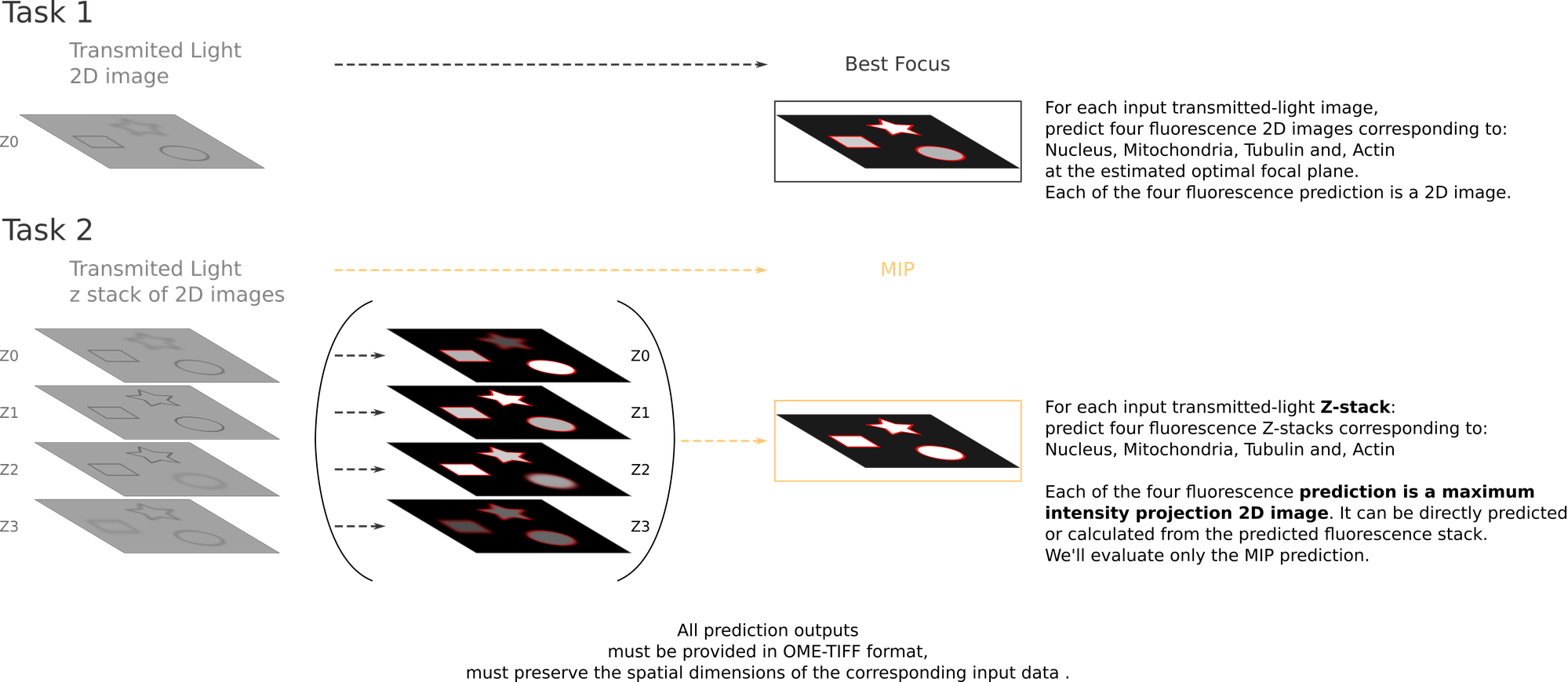
The Light My Cells 2 challenge, organized by France BioImaging, aims to advance in-silico labeling methods for biological microscopy. Participants must predict fluorescence images of four cellular structures (nucleus, mitochondria, tubulin, and actin) from label-free transmitted-light microscopy images acquired using bright-field (BF), phase-contrast (PC), or differential interference contrast (DIC) modalities.
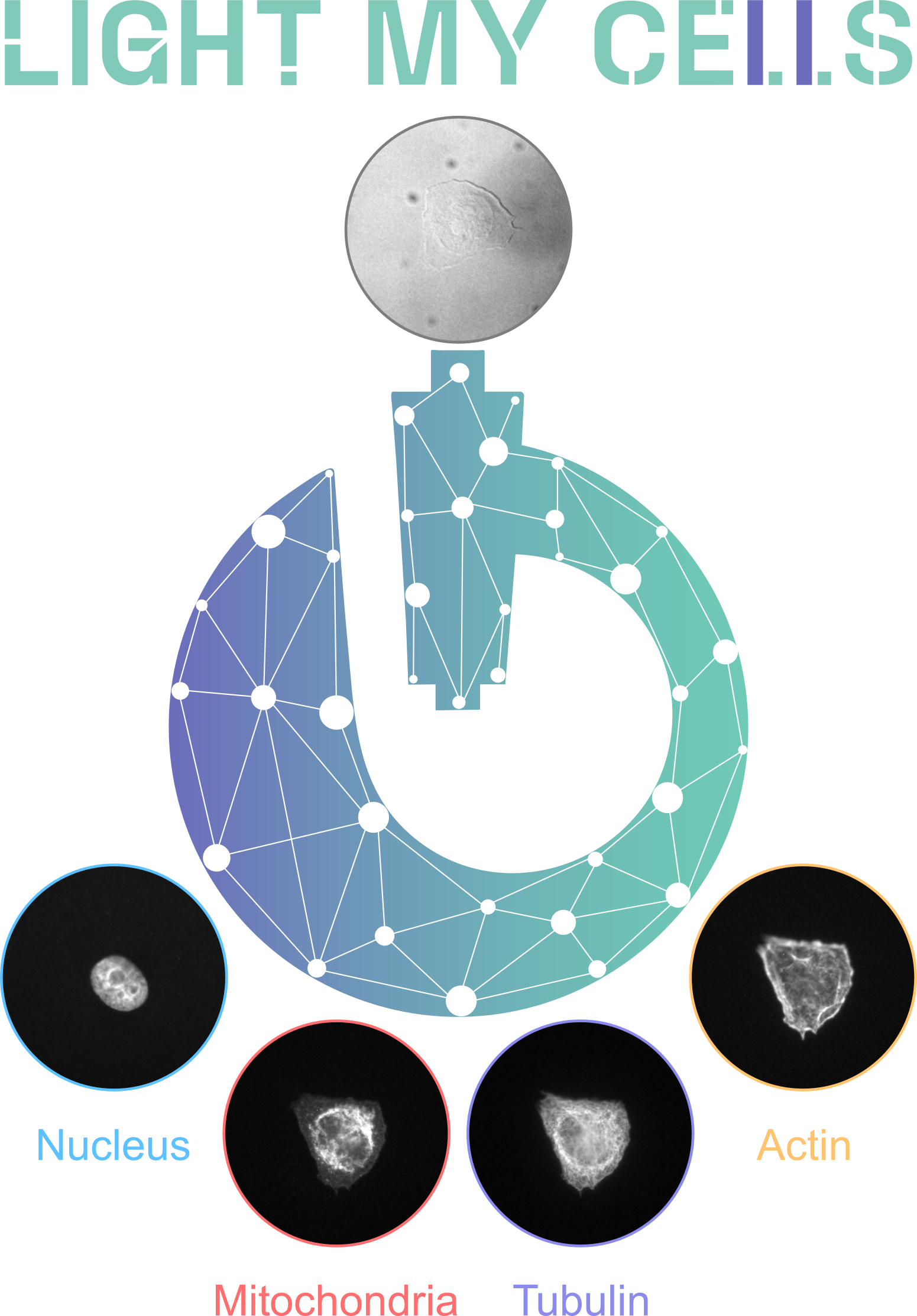
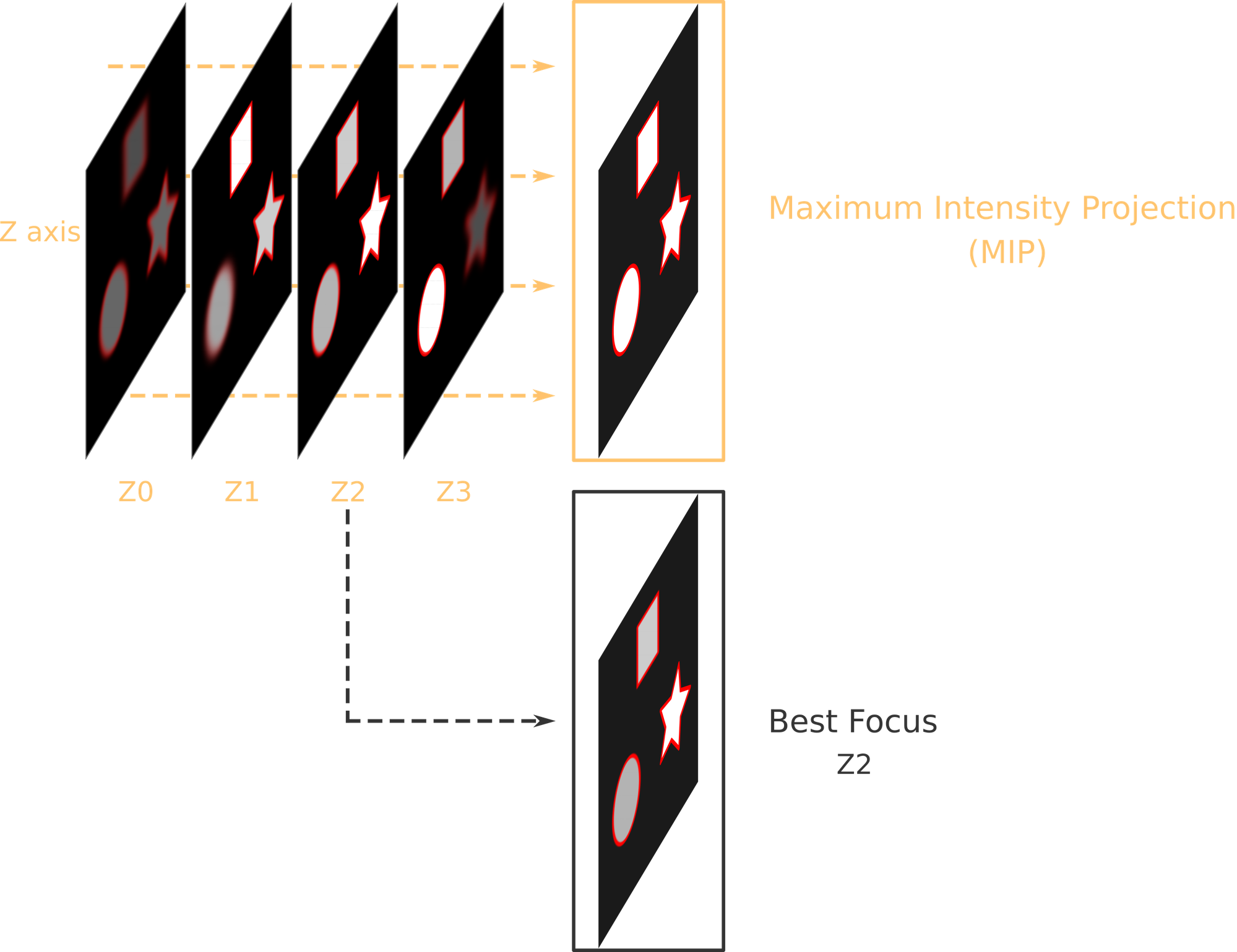
Building on the success of the first edition in 2024, Light My Cells 2 introduces additional training data and a new prediction task to predict the fluorescence maximum-intensity projection (MIP) from transmitted-light image stacks.
Motivations
Fluorescence microscopy requires biochemical labeling procedures that are costly, time-consuming, and potentially perturb biological systems through phototoxicity, photobleaching, and fluorophore-induced cellular alterations. In contrast, transmitted-light microscopy is label-free, minimally invasive, and well suited for long-term live imaging. The goal of in-silico labeling is therefore to recover fluorescence information computationally from transmitted-light images.
The challenge
The challenge focuses on developing robust multi-output deep learning methods capable of predicting multiple fluorescence channels despite heterogeneous training data, incomplete channel availability, and substantial variability in imaging conditions (e.g., magnification, numerical aperture, acquisition site, and focal position).
- Participants are very encouraged to explore novel architectures, loss functions, and metadata-aware training strategies.
The dataset combines acquisitions from multiple imaging facilities, microscope systems, cell lines, and transmitted-light modalities, providing a level of variability.
Performance will be evaluated using at least the Structural Similarity (SSIM) and Pearson Correlation Coefficient (PCC). As in the first edition, the final ranking will be obtained by averaging metric-specific ranks across all organelles. In addition to the leaderboard, bonuses will recognize code quality and accessibility, lightweight models, efficient training and inference times, metadata-aware training strategy and efforts to evaluate and reduce the carbon footprint of AI models
Light My Cells 2 aims to establish a new reference benchmark for in-silico labeling and accelerate the adoption of AI-driven label-free imaging approaches across the bioimaging community.